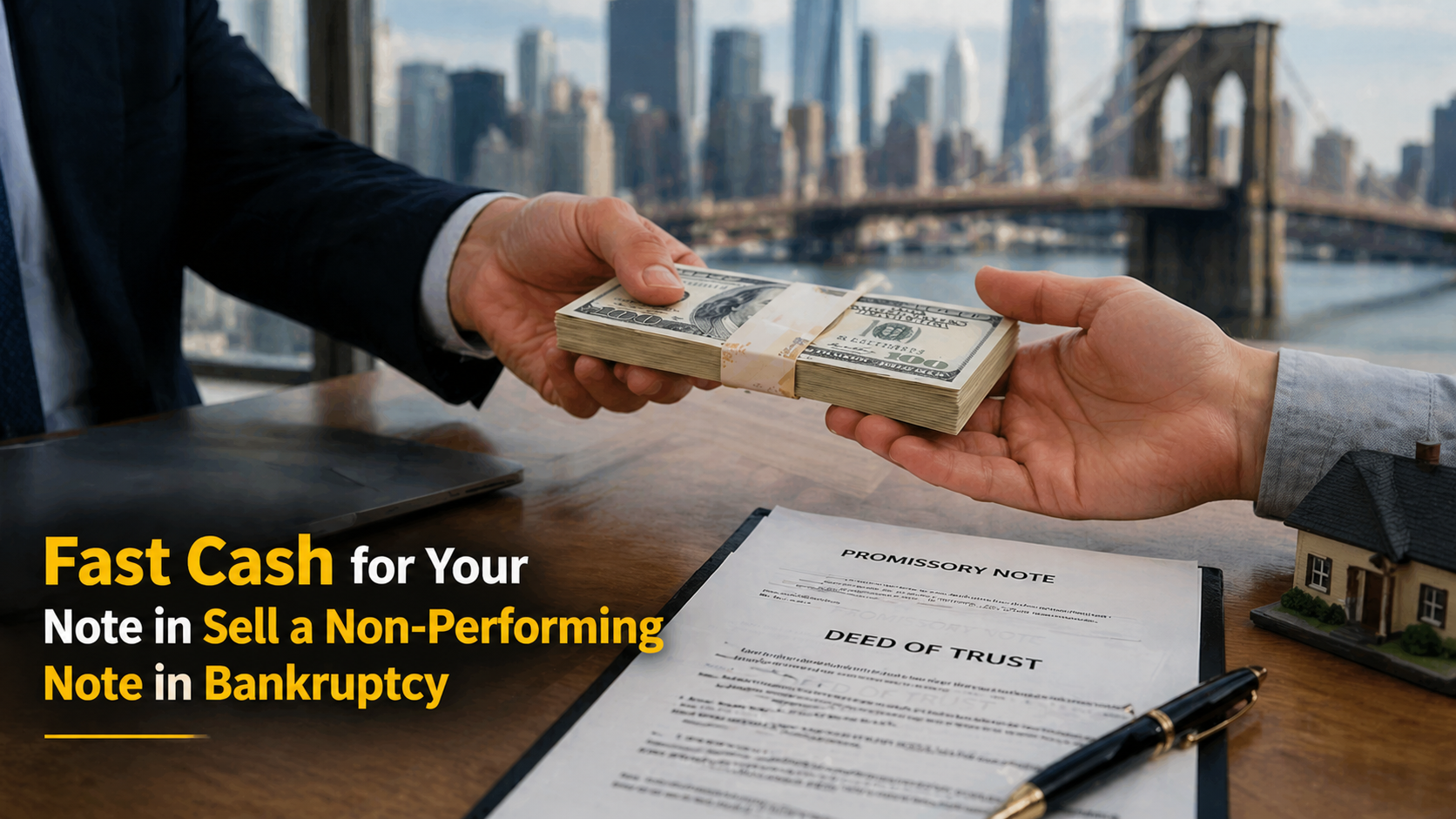
Your borrower has filed for bankruptcy. The foreclosure is on hold. And you are wondering if you are completely stuck.
You are not stuck. You can sell a non-performing note even when the borrower is in active bankruptcy. Buyers like TrustedNoteBuyer.com purchase notes in bankruptcy situations across all 50 states regularly.
However, bankruptcy adds complexity to the process. Understanding how it works — and what to expect — helps you move forward confidently and make the right decision for your financial situation.
This article explains everything you need to know about selling a non-performing note when the borrower has filed for bankruptcy.
What happens when a borrower files for bankruptcy?
When a borrower files for bankruptcy, an automatic stay goes into effect immediately. The automatic stay is a federal court order that halts all collection activity against the borrower. That includes foreclosure proceedings, collection calls, and demand letters.
As a note holder, the automatic stay means your foreclosure stops. You cannot move forward with the foreclosure process until the stay is lifted or the bankruptcy case is resolved. Furthermore, you cannot contact the borrower directly about the debt while the stay is in effect.
The automatic stay does not mean your note has no value. It does not mean you are permanently blocked from recovering your investment. It simply means the resolution timeline has changed — and your options have shifted.
Selling the note is one of the most effective ways to exit a bankruptcy situation quickly and cleanly.
Can you sell a non-performing note in bankruptcy?
Yes — absolutely. Selling a note where the borrower is in active bankruptcy is entirely possible. It is also entirely legal.
The note itself is your asset. The bankruptcy belongs to the borrower. Your right to sell the note is not affected by the borrower’s bankruptcy filing. You can transfer the note to a buyer at any point during the bankruptcy proceedings — just as you would in any other note sale.
The buyer steps into your legal position. They become the new note holder. They take on all responsibility for navigating the bankruptcy process — including filing for relief from the automatic stay, participating in the bankruptcy proceedings, and pursuing resolution after the case concludes.
Therefore, selling the note transfers not just the asset — it transfers the entire legal situation to a buyer who specializes in exactly this kind of resolution.
Types of bankruptcy that affect non-performing notes
Not all bankruptcies are the same. The type of bankruptcy the borrower has filed affects the note’s value and the resolution timeline. Understanding the differences helps you have an informed conversation with any buyer.
Chapter 7 bankruptcy
Chapter 7 is a liquidation bankruptcy. The borrower’s non-exempt assets are sold to pay creditors. The process typically concludes in three to six months.
For note holders, Chapter 7 often produces a relatively fast resolution. If the borrower has no equity in the property, they are likely to surrender it — which accelerates the foreclosure timeline after the stay is lifted. However, if the borrower has equity, they may work to protect the property.
Chapter 7 notes are purchased regularly by experienced note buyers. The relatively short timeline and defined process make them more straightforward to evaluate and price.
Chapter 13 bankruptcy
Chapter 13 is a reorganization bankruptcy. The borrower proposes a repayment plan — typically three to five years — to catch up on missed payments and satisfy creditors. If the court approves the plan and the borrower completes it successfully, they can keep the property.
For note holders, Chapter 13 is more complex. The repayment plan may modify the terms of your note. Furthermore, the timeline extends significantly — three to five years of plan payments before a final resolution. Additionally, borrowers in Chapter 13 sometimes fail to complete their plans, which restarts the foreclosure process after the bankruptcy concludes.
Chapter 13 notes are more challenging to value but are still purchased by experienced note buyers. The offer will reflect the additional complexity and extended timeline.
Chapter 11 bankruptcy
Chapter 11 is typically used by businesses and commercial borrowers. It is a reorganization bankruptcy similar to Chapter 13 but more complex and potentially longer in duration.
Commercial notes in Chapter 11 bankruptcy are purchased by specialized note buyers. However, the evaluation process is more detailed and the timeline is less predictable. Therefore, expect a longer evaluation period and a more conservative offer.
How does bankruptcy affect the value of your note?
Bankruptcy adds complexity and extends the resolution timeline. Both of those factors affect the offer you receive. However, they do not eliminate the value of your note.
Here is how each factor plays out.
Extended timeline
Bankruptcy extends the time it takes to resolve the default. A Chapter 7 case adds three to six months. A Chapter 13 case can add three to five years if the borrower completes the plan. That additional time costs the buyer money in carrying costs and lost investment returns. Consequently, the offer reflects that extended timeline.
Legal complexity
Navigating a bankruptcy requires specialized legal expertise. The buyer must file for relief from the automatic stay, participate in creditor meetings, and monitor the bankruptcy proceedings throughout. Those legal costs are factored into the offer.
Collateral protection
Despite the added complexity, the collateral — the real property — still has value. A note with a strong loan-to-value ratio retains significant value even in bankruptcy. Therefore, a low LTV note in bankruptcy will still receive a competitive offer. The bankruptcy adds a discount — but it does not eliminate the value.
Borrower equity position
A borrower with equity in the property has an incentive to cooperate in bankruptcy. They may propose a plan to catch up on payments or negotiate a deed in lieu of foreclosure. As a result, notes where the borrower has meaningful equity are viewed more favorably — even in bankruptcy.
Why selling during bankruptcy is often the right move
Many note holders wait out the bankruptcy — hoping the case will resolve quickly and they can resume foreclosure. However, that waiting strategy often produces a worse financial outcome.
Here is why selling makes sense.
You stop the bleeding immediately
Every month you hold a note in bankruptcy, costs accumulate. Your foreclosure is frozen. You cannot collect payments. Furthermore, attorney fees for bankruptcy creditor representation add up quickly. Selling stops all of those costs immediately.
You transfer the complexity to a specialist
Bankruptcy proceedings are complex. They require specialized legal knowledge and ongoing court involvement. Most private note holders did not sign up for that level of legal management. Selling transfers every aspect of that complexity to a buyer who handles it every day.
You get guaranteed cash now
The alternative to selling is waiting — months or years — for the bankruptcy to resolve. And the outcome is still not guaranteed after that. Selling gives you certain cash today. You eliminate every risk and every cost in a single transaction.
You free up capital to redeploy
Money tied up in a note in bankruptcy is not working for you. It is frozen. Selling converts that frozen asset into liquid capital you can deploy immediately into better opportunities.
The sale process for notes in bankruptcy
Selling a non-performing note in bankruptcy follows the same basic steps as any note sale. However, there are a few additional considerations specific to the bankruptcy situation.
Step 1 — Disclose the bankruptcy immediately
When you contact TrustedNoteBuyer.com, disclose the borrower’s bankruptcy filing immediately. Include the chapter filed, the filing date, the bankruptcy case number, and the current status of the case. Transparency upfront allows the buyer to evaluate the note accurately and set realistic expectations.
Never attempt to conceal a bankruptcy filing. It will be discovered during due diligence. And failing to disclose it upfront can kill the transaction entirely.
Step 2 — Gather your bankruptcy documents
In addition to the standard note sale documents, you will need bankruptcy-specific paperwork. These include the bankruptcy petition confirming the chapter and filing date. You also need the automatic stay notice confirming the stay is in effect. Any proof of claim you have filed with the bankruptcy court is important. Additionally, include any court orders related to your note — including any motions for relief from stay that have been filed or decided.
Having these documents organized before you submit speeds up the evaluation process considerably.
Step 3 — Receive your offer
After reviewing your note details and bankruptcy documents, TrustedNoteBuyer.com presents a written cash offer. In most cases, you receive your offer within two to three business days of submitting complete documentation.
The offer reflects the bankruptcy chapter, the LTV, the property type, the state, and the complexity of the case. A Chapter 7 note with a strong LTV will receive a stronger offer than a Chapter 13 note with a high LTV and a complex repayment plan.
Step 4 — Accept and complete due diligence
Once you accept, due diligence begins. The buyer reviews your note documents and bankruptcy filings in detail. They confirm the LTV, verify the lien position, and assess the status of the bankruptcy proceedings. Due diligence on a bankruptcy note typically takes one to two weeks with complete documentation.
Step 5 — Coordinate with your bankruptcy attorney
Notify your bankruptcy attorney that you are selling the note. The attorney will need to prepare the documents transferring your creditor position in the bankruptcy to the buyer. This is a standard procedure. However, it requires coordination between your attorney and the buyer’s legal team. Therefore, notify your attorney as soon as you accept the offer to keep things moving.
Step 6 — Close and receive your funds
Closing is handled through a title company or escrow agent. You sign the note purchase agreement, the endorsement, and the assignment of the deed of trust or mortgage. The buyer funds the transaction and your cash is wired to your bank account.
After closing, the buyer takes over your position as a creditor in the bankruptcy. They manage all further proceedings. You walk away clean — with cash in hand and zero further obligations.
The entire process typically takes two to four weeks from initial submission to funded closing. Complex bankruptcy situations may take a few additional days.
What if the bankruptcy is dismissed or discharged before closing?
Sometimes a bankruptcy case is dismissed or discharged while your note sale is in process. Here is what that means for your transaction.
A dismissal means the bankruptcy case was thrown out — typically because the borrower failed to meet their obligations. When a case is dismissed, the automatic stay lifts and foreclosure can resume. This is generally positive news for the note’s value. Notify your buyer immediately if the bankruptcy is dismissed.
A discharge means the borrower’s debts have been formally eliminated by the court. In a Chapter 7 case, this typically happens three to four months after filing. After discharge, foreclosure can resume against the property — even though the borrower’s personal liability is eliminated. Notify your buyer immediately if a discharge occurs.
Either outcome — dismissal or discharge — typically improves the note’s resolution timeline and may strengthen the offer you receive.
Selling a portfolio of notes in bankruptcy
If you are holding multiple notes where borrowers have filed for bankruptcy — or a mixed portfolio of performing, non-performing, and bankruptcy notes — you can sell them all in a single transaction.
TrustedNoteBuyer.com purchases note portfolios of all sizes and all statuses. We buy performing notes, non-performing notes, foreclosure notes, and bankruptcy notes together in a single closing. You deal with one buyer through one streamlined process. And you free up all of your capital simultaneously.
Frequently asked questions
Can I sell a note while the automatic stay is in effect?
Yes. The automatic stay applies to collection activity against the borrower. It does not prevent you from selling the note itself. You can transfer the note to a buyer at any point during the bankruptcy — including while the stay is fully in effect.
Does the buyer need court approval to purchase a note in bankruptcy?
In most cases, no. The sale of the note itself does not require court approval. However, the buyer will need to file for relief from the automatic stay before they can resume foreclosure proceedings after the purchase.
Will I receive less for my note because of the bankruptcy?
Bankruptcy adds complexity and extends the resolution timeline. Both factors affect the offer. However, a note with a strong LTV retains significant value even in bankruptcy. The discount reflects the added complexity — not a total loss of value.
What chapter of bankruptcy produces the best offer?
Chapter 7 typically produces stronger offers because the timeline is shorter and the process is more defined. Chapter 13 notes receive deeper discounts due to the three to five year repayment plan timeline and the additional complexity involved.
Do I need a bankruptcy attorney to sell my note?
You do not need an attorney to sell the note. However, your existing bankruptcy attorney needs to be informed of the sale so they can prepare the documents transferring your creditor position to the buyer.
Does TrustedNoteBuyer.com buy bankruptcy notes in all 50 states?
Yes. TrustedNoteBuyer.com purchases non-performing notes in bankruptcy across all 50 states — single notes and portfolios, all property types, all bankruptcy chapters.
The bottom line
A borrower bankruptcy does not mean your note is unsellable. It means the situation is more complex — and that complexity is exactly what experienced note buyers are equipped to handle.
Selling a non-performing note in bankruptcy gives you guaranteed cash now. It transfers every legal complication to a specialist buyer. And it ends your involvement in a situation that could otherwise drag on for years.
TrustedNoteBuyer.com buys non-performing notes in bankruptcy across all 50 states. No fees. No brokers. No obligation. Fast offers and faster closings.
Ready to sell your bankruptcy note? Get your free offer at TrustedNoteBuyer.com today.
A quick sale of a non performing note allows you to avoid further deterioration of the asset. Delays can lead to additional complications and lower recovery value. Selling quickly ensures you secure cash and move forward with certainty.
If you need to sell my non performing note fast, working with a direct buyer is the most efficient option. The process eliminates unnecessary delays and provides a clear path to closing. You can turn a non-paying asset into immediate capital in days.
We buy non performing land notes and help note holders recover value from vacant or undeveloped property financing. These notes can be difficult to enforce and collect on when payments stop. Selling provides a simple way to eliminate risk and secure cash.